Water Softeners vs. Water Filters: What They Are, What They Aren't, and Why They Work Best Together
Two different jobs, one better result when they're paired together.
September 23, 2026 · 3 min read
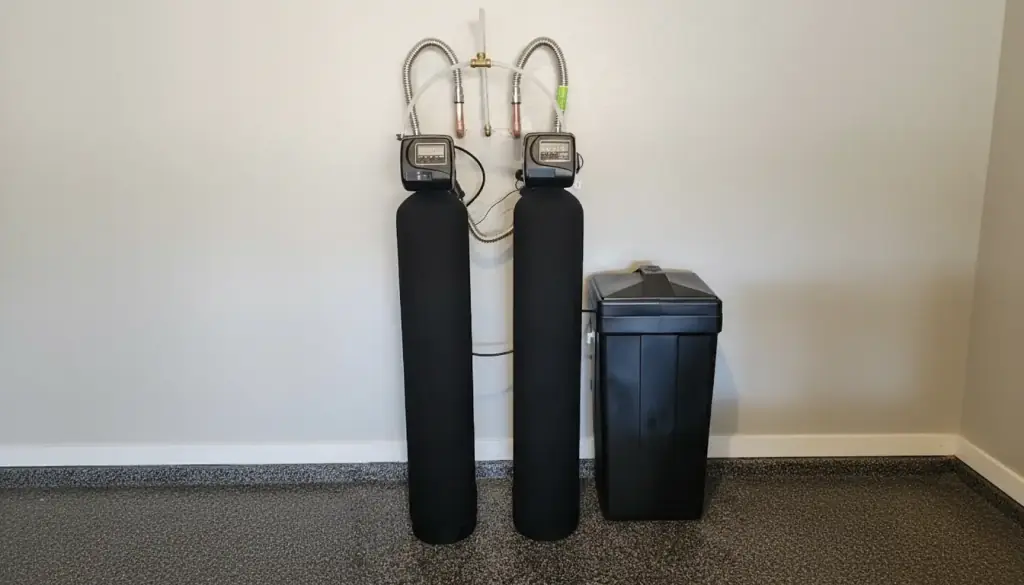
Water softeners and water filters get lumped together a lot, and it's easy to see why, they're often installed in the same spot in the house and they're both aimed at making your water better. But they solve two different problems, and knowing which one you actually need, or whether you need both, makes a real difference.
There are plenty of great things about living in Arizona. The water isn't usually one of them. If you're in the Valley, your home is dealing with chronically hard water whether you've noticed it yet or not.
Knowing the difference matters most when you're the one deciding what to install, or trying to figure out why the water in your own home doesn't feel or taste the way you'd like it to.
What a Water Softener Actually Does
A water softener is built specifically to deal with hard water, which is exactly what homes across the Valley are up against. Hard water decreases the efficiency and shortens the lifespan of plumbing and fixtures over time, so a softener is less about taste and more about protecting everything the water touches. A softener works through an ion exchange process inside a resin tank, swapping out the minerals that cause hardness for ones that don't build up the same way.
What Softening Gets You
- Reduced detergent usage, since soft water lathers and rinses more efficiently
- More efficient water heating, because scale isn't building up inside the tank or lines
- Healthier feeling skin after a shower
- Softer fabrics coming out of the wash
- No hard water buildup on fixtures and appliances
- Elimination of chlorine and other organics from the water
What a Water Filter Actually Does
A water filter is a different job entirely. Instead of targeting hardness, a filter is built to improve the water's taste, smell, and overall quality, pulling out chlorine and other compounds that affect how the water tastes and smells coming out of the tap.
What Filtering Gets You
- Healthier feeling skin
- Elimination of unpleasant odors from the water
- Softer fabrics after washing
- Elimination of chlorine and other organics
- Better tasting water throughout the house
Why They Work Best Together
There's a good reason a lot of homes end up with both. A softener handles the mineral hardness that's rough on your plumbing, and a filter handles the taste and odor issues that a softener alone doesn't fully solve. As Majesty Plumbing puts it, either you have a filter, or you are the filter. Running both together covers more ground than either one on its own.
How to Tell Which One You Might Need
A few signs point toward hardness specifically: white, chalky buildup around faucets and showerheads, soap that doesn't lather the way it should, or fabrics that feel stiff after they come out of the wash. A few signs point toward taste and odor instead: water that tastes or smells like chlorine, or just doesn't taste as good as you'd like straight from the tap. Sometimes both show up at once, which is usually the clearest sign a combined system is worth it.
A Note on Reverse Osmosis
If your main concern is drinking water quality specifically, a reverse osmosis system is worth asking about too. It's a separate system from a whole house softener or filter, installed to serve drinking and cooking water specifically rather than the whole home. Majesty Plumbing installs, maintains, and repairs RO systems as well, and financing is available for those too.
One Thing Worth Knowing Before You Install a Tankless Water Heater
If a tankless water heater is somewhere on your radar, this matters more than it might seem. Majesty Plumbing's advice is that you should never install a tankless water heater unless there's already a functioning, quality water softener system in place. Hard water is hard on a tankless unit's internal components, and skipping the softener step now tends to cost more later.
Getting Started
Majesty Plumbing offers a free water quality assessment and walks through the written options for whatever we find, whether that's a softener, a filter, or both. Every system comes with industry standard warranties, and financing is available if you'd rather spread the cost out.
If you're not sure which one your home actually needs, that's exactly what the assessment is for. Call Majesty Plumbing at (480) 677-2221 and we'll take a look.
Majesty Plumbing, (480) 677-2221
Call (480) 677-2221More articles
Tankless Water Heater Repair: Warning Signs You Shouldn't Ignore
A few warning signs almost always show up before a tankless water heater fails completely, if you know what to look for.
8 Common Causes of Low Water Pressure in Mesa Homes (And What to Do Next)
Most low pressure problems in the Valley trace back to one of a handful of usual suspects.